From everyday sensing to meaningful health insights.
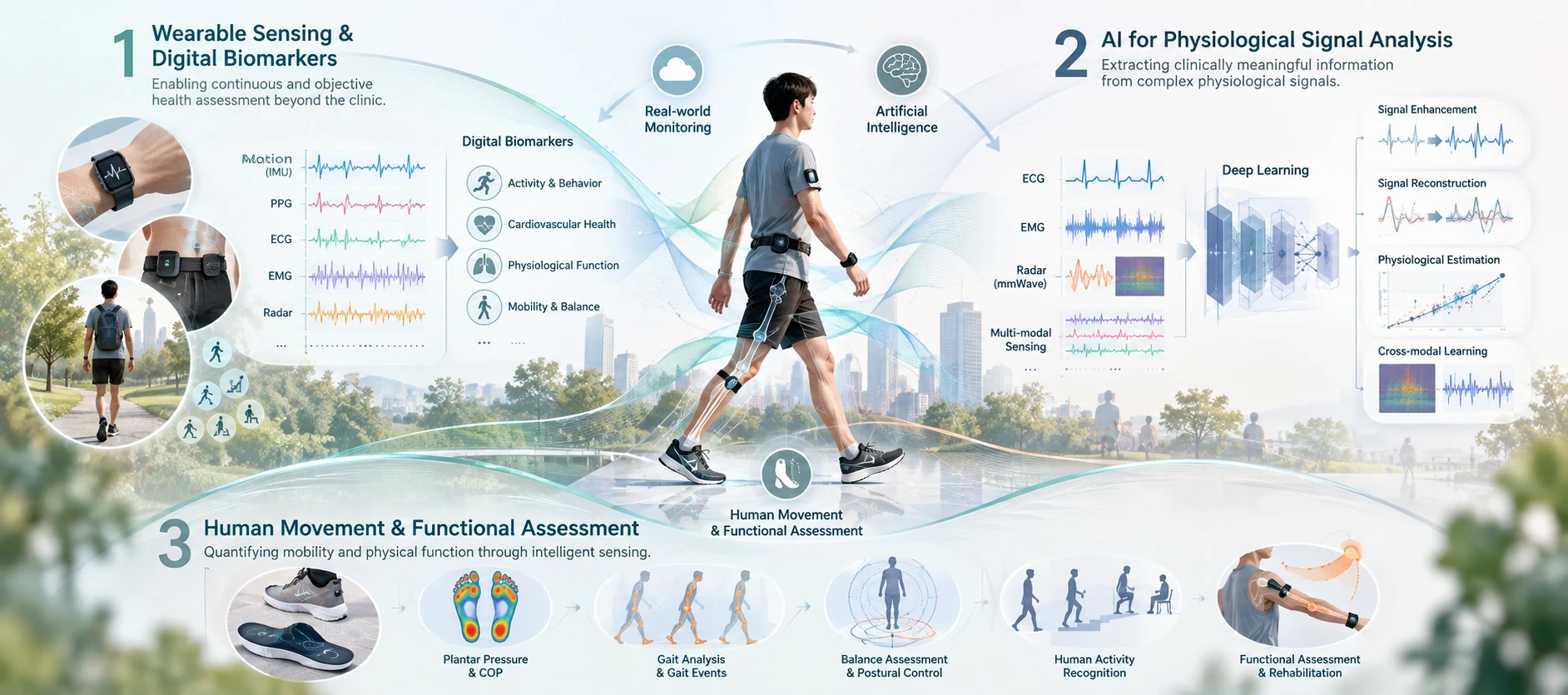
At the Digital Health Analytics Lab (DHA Lab), we integrate wearable sensing, physiological signal processing, and artificial intelligence to develop data-driven approaches for health monitoring and clinical assessment. By bridging engineering innovation with clinical research, we aim to translate physiological and behavioral data into reliable, interpretable, and clinically meaningful measures of human health and function.
Conceptual illustration · Wearable sensing, AI-driven analysis, and clinical assessment
OUR CORE DIRECTIONS
Three research areas. One shared mission.
Our research spans the full path from sensing technologies and AI methods to functional assessment and real-world clinical applications.
01 / 03
REAL-WORLD DIGITAL HEALTH
Wearable Sensing & Digital Biomarkers
Enabling continuous and objective health assessment beyond the clinic.
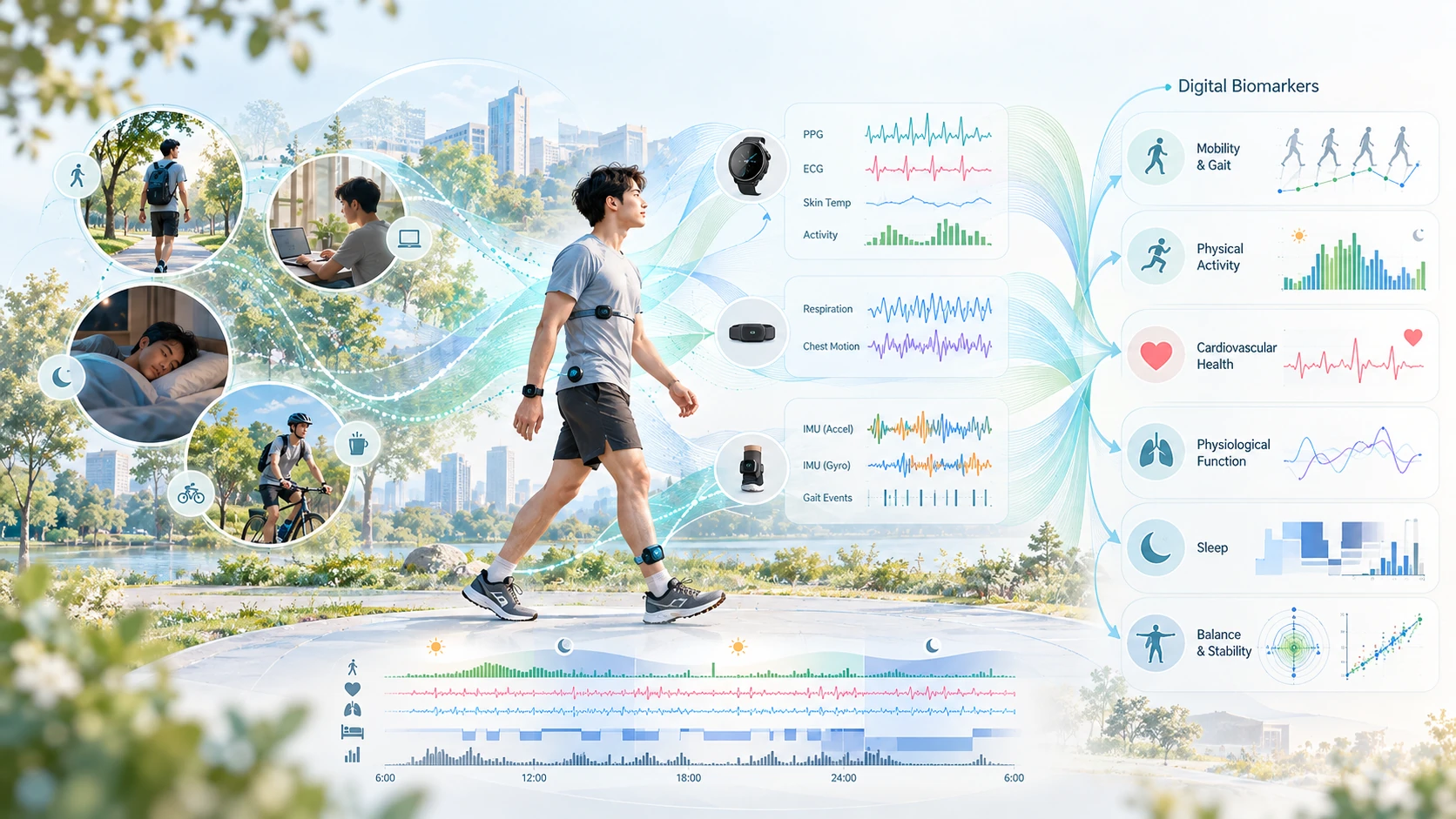
Conceptual illustration · Real-world sensing to digital health measures.
Our research explores how wearable and mobile sensing technologies can capture physiological and behavioral information in everyday life. By integrating inertial sensors, smartwatches, and other sensing modalities, we develop approaches for monitoring physical activity, mobility, and health-related behaviors beyond conventional clinical environments.
A major focus is the development of digital biomarkers that translate continuous sensor measurements into objective and clinically meaningful indicators of health and functional status. Our work addresses challenges associated with real-world data collection, including variations in daily activities, sensor placement, data quality, and individual differences.
Through clinical collaborations, we investigate how wearable-derived measures can complement conventional assessments, characterize physical function, and support longitudinal monitoring of health-related changes in free-living environments.
Wearable & Mobile SensingFree-Living MonitoringDigital BiomarkersClinical Validation
02 / 03
COMPUTATIONAL PHYSIOLOGY
AI for Physiological Signal Analysis
Extracting clinically meaningful information from complex physiological signals.
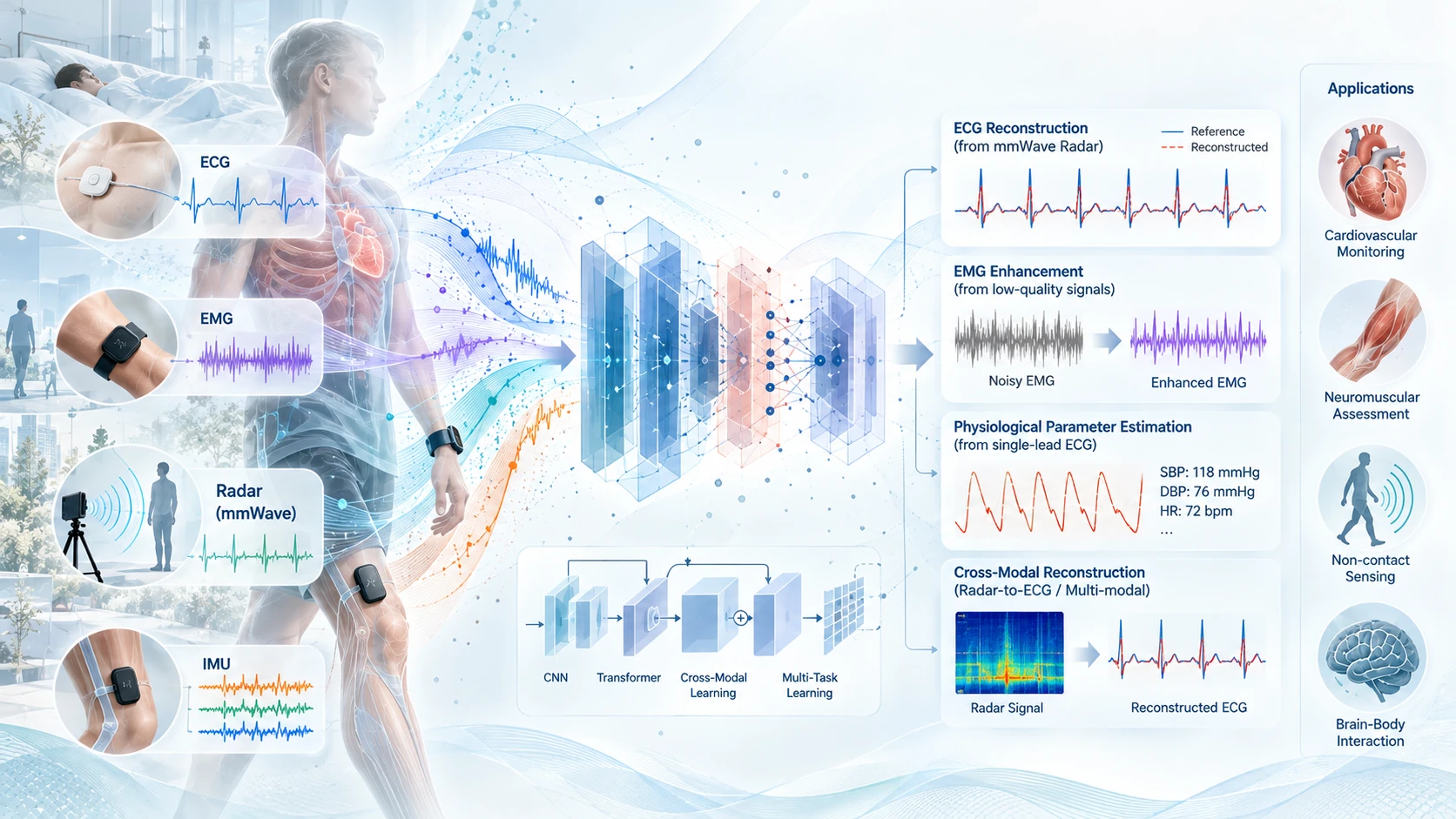
Conceptual illustration · Multimodal physiological signals and deep learning.
We develop signal processing and artificial intelligence methods to analyze, enhance, and interpret physiological signals acquired from wearable and contactless sensing systems. Our research spans electrocardiography (ECG), electromyography (EMG), inertial sensing, and millimeter-wave radar.
We investigate deep learning, signal denoising, super-resolution, quality assessment, and cross-modal reconstruction to recover useful physiological information from noisy, low-resolution, or indirect measurements. These methods address practical limitations in biomedical sensing and data acquisition.
Our work includes contactless ECG reconstruction from radar measurements and neural enhancement of surface EMG signals. By combining physiological insight with data-driven modeling, we aim to support reliable, efficient, and clinically relevant physiological monitoring.
Deep LearningSignal ReconstructionECG & EMGmmWave RadarMultimodal AI
03 / 03
MOBILITY & FUNCTION
Human Movement & Functional Assessment
Quantifying mobility and physical function through intelligent sensing.
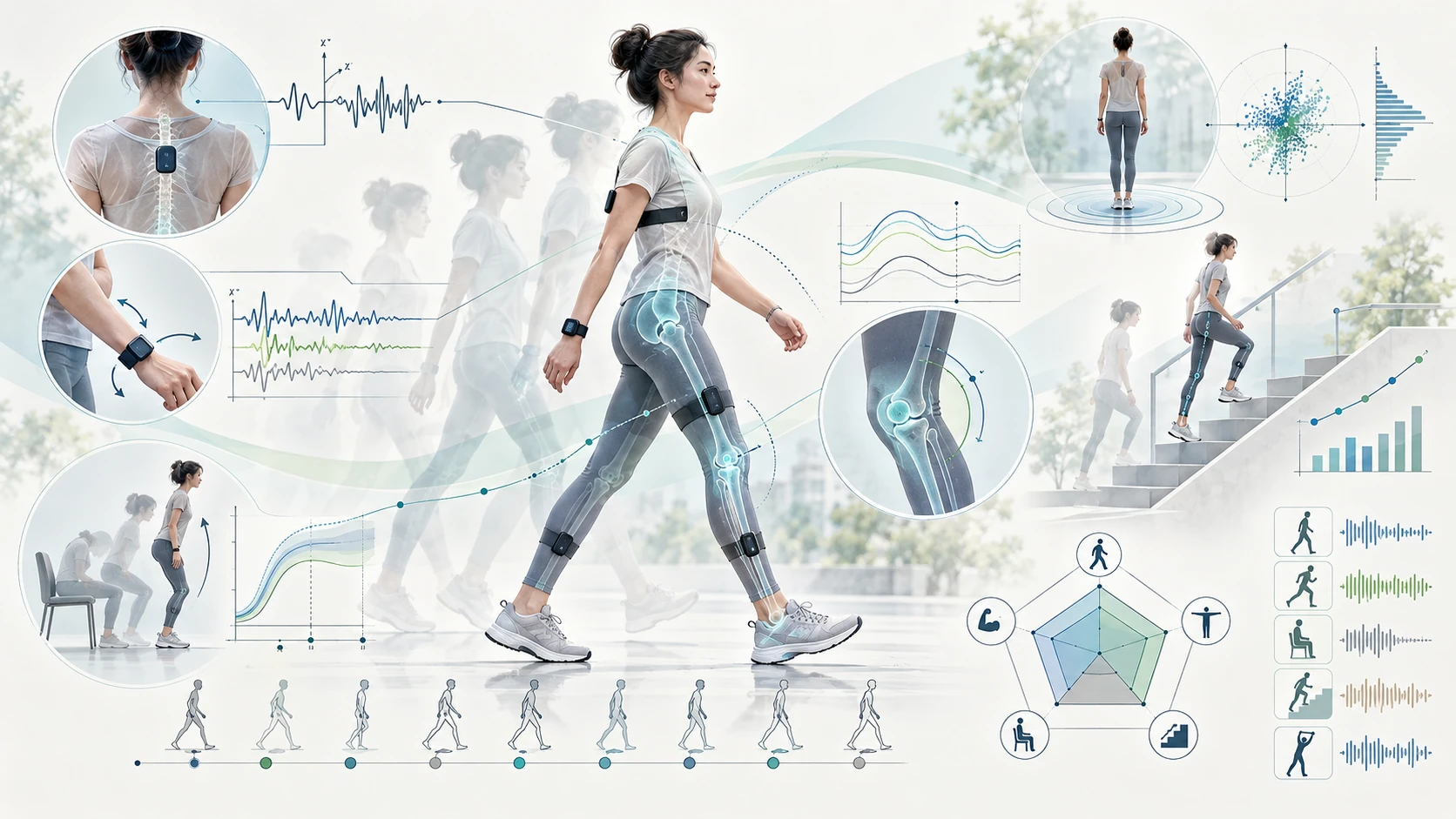
Conceptual illustration · Gait, balance, and functional movement assessment.
Our research focuses on the quantitative assessment of human movement, gait, balance, and physical function using wearable sensors and intelligent computational methods. We study how inertial measurements and complementary motion-sensing technologies capture meaningful aspects of everyday movement and mobility.
We investigate human activity recognition, gait analysis, movement segmentation, postural control, and functional-task assessment to extract interpretable biomechanical and functional metrics. Our methods link observed motion patterns with outcomes relevant to clinical evaluation.
An important emphasis is the application of these technologies to rehabilitation and clinical assessment, including mobility limitations, vestibular disorders, and musculoskeletal and neuromuscular conditions. We aim to develop sensor-derived measures that complement traditional tests and track meaningful changes in physical function.